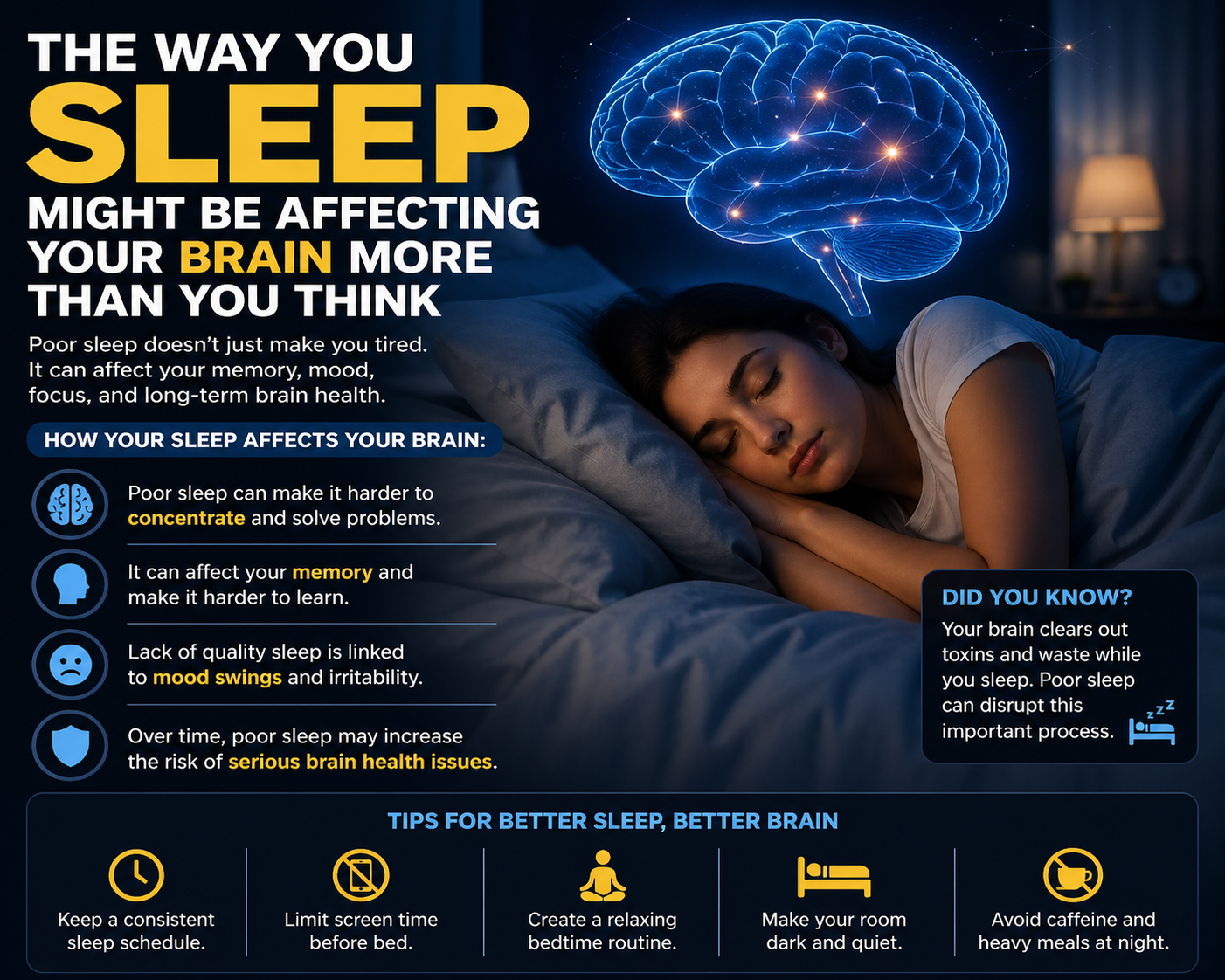
Most people think sleep is just about how long you rest.
But experts say how you sleep could be just as important—and it might be quietly impacting your brain every single night.
From your position, to your routine, to how often you wake up, small habits can add up in ways you don’t notice right away.
And the effects?
They’re bigger than most people expect.
According to sleep specialists, inconsistent sleep patterns can affect memory, focus, and even mood. Ever wake up feeling tired even after a full night’s sleep? That might not be random.
It could be your sleep quality.
“Your brain uses sleep to reset and recover,” experts explain. “If that process is disrupted, it can affect how you think and feel the next day.”
Things like scrolling on your phone before bed, sleeping at different times each night, or even your sleeping position can play a role.
For example:
- Sleeping irregular hours can confuse your body clock
- Poor posture during sleep can affect breathing
- Constant interruptions can prevent deep, restorative sleep
Over time, these patterns may lead to difficulty concentrating, lower energy, and increased stress levels.
The good news?
Small changes can make a difference.
Keeping a consistent bedtime, limiting screen time before sleep, and creating a calm environment are simple steps that can improve how your brain functions day-to-day.
Because in the end—
It’s not just about getting sleep.
It’s about getting the right kind of sleep.