You start the day feeling fine.
Maybe even a little motivated.
But by mid-morning—or worse, right after lunch—you feel it: your energy drops, your focus disappears, and suddenly even simple tasks feel harder than they should.
If that sounds familiar, you’re not the only one.
Energy crashes during school are extremely common, especially for teenagers. And while it might feel random, there are actually clear reasons behind it.
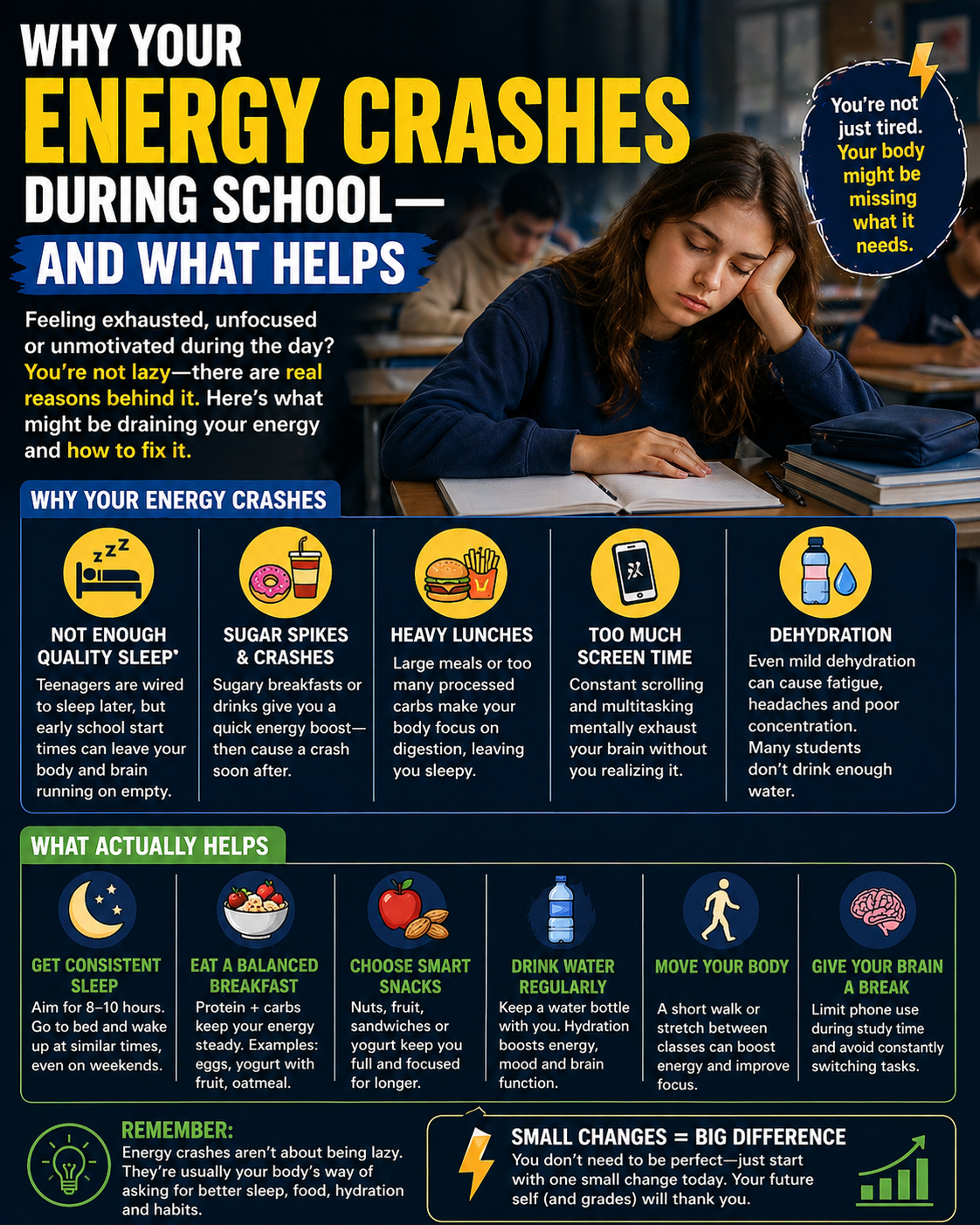
One of the biggest causes is sleep.
Teenagers naturally have a different body clock, meaning your brain wants to stay up later and wake up later. But school schedules don’t match that. So even if you think you’re getting “enough” sleep, your body might still feel tired at the wrong times.
Another major factor is what you eat—especially in the morning.
If you skip breakfast or eat something high in sugar (like pastries or sweet drinks), your energy can spike quickly… and then crash just as fast. That’s because your blood sugar rises and drops rapidly, leaving you feeling drained.
“What you eat in the morning sets the tone for your energy all day,” experts often say.
Then there’s the lunch effect.
After eating, your body redirects energy toward digestion. If your lunch is heavy or full of processed carbs, that sleepy feeling hits even harder—making afternoon classes the toughest part of the day.
But it’s not just food and sleep.
Screen time and focus habits also play a role.
Constant scrolling, switching between apps, or multitasking can actually tire your brain faster. Even though it feels like you’re doing less work, your brain is working harder to keep up, which leads to mental fatigue.
And don’t forget hydration.
Even being slightly dehydrated can make you feel tired, unfocused, and sluggish—something a lot of students overlook.
So what actually helps?
You don’t need a complete life reset. Small changes can make a real difference:
- Get consistent sleep: Try to go to bed and wake up at similar times, even on weekends
- Eat a balanced breakfast: Include protein + carbs (like eggs and toast, or yogurt and fruit)
- Choose smarter snacks: Nuts, fruit, or sandwiches keep energy steady longer than sugary snacks
- Drink water regularly: Not just when you feel thirsty
- Limit phone use during study time: Give your brain a break from constant switching
- Move a little: Even a short walk between classes can boost your energy
One more thing that might surprise you:
Energy crashes aren’t always about being lazy or unmotivated.
They’re often your body telling you something’s off—whether it’s sleep, food, or habits.
Once you start paying attention to those patterns, it gets easier to fix them.
Because the truth is—
That “afternoon crash” isn’t something you just have to deal with.
You can actually do something about it.